Industry
Conflict-Free & Authentic: Sourcing, Treatments & Synthetics
What conflict diamonds are, how the Kimberley Process follows a stone from mine to invoice, and how a laboratory tells a treated, synthetic or imitation diamond from the genuine, untouched article.
Two questions sit behind every serious diamond purchase, and neither is often asked aloud. The first is a matter of conscience — where did this stone come from, and did anyone suffer for it? The second is a matter of fact — is it what the seller says it is: natural, untreated, a diamond at all? A confident purchase is simply one in which both have been answered before a price is agreed. What follows is how the trade answers them, and why, in the end, both questions resolve to the same two things: a documented chain of custody, and an independent laboratory certificate.
What a conflict diamond actually is
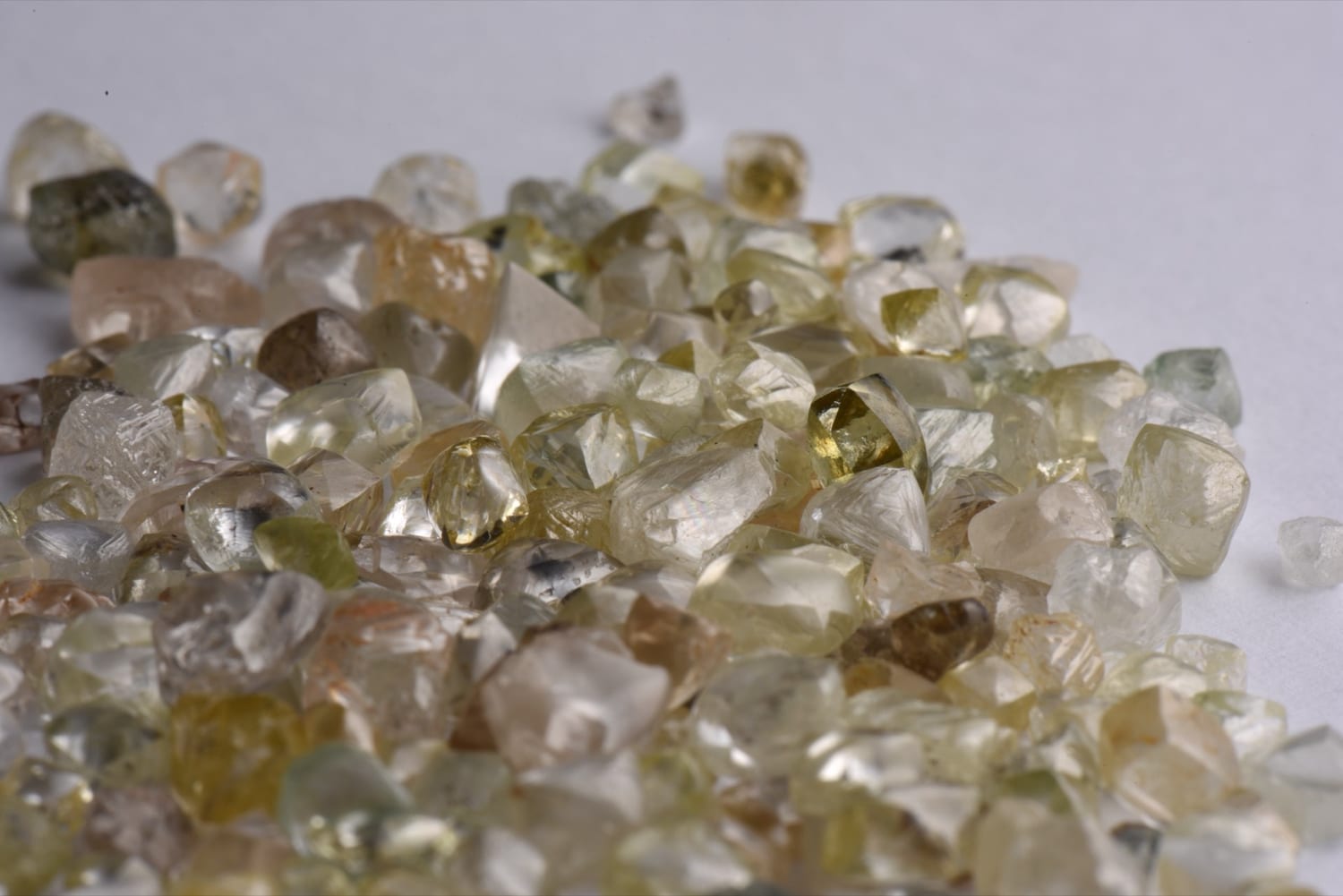
People worry about conflict diamonds without always knowing what the term describes, and it is worth being precise. A conflict diamond is not defined by where it was found or how it was cut, but by what it paid for — and the trade has spent two decades building the machinery to keep such stones out of legitimate hands.
Conflict diamonds, also known as “blood” diamonds, are rough diamonds used by rebel movements or their allies to finance armed conflicts aimed at undermining legitimate governments. — The Kimberley Process
The first time the United Nations named “conflict” diamonds and banned their purchase was in 1998, in Angola. Independent since 1975, the country had fallen into a civil war that ran until 2002; the National Union for the Total Independence of Angola (UNITA) sold an estimated US$3.72 billion worth of diamonds to fund its campaign. That same year Global Witness — among the first to expose the trade — published A Rough Trade, revealing the role diamonds played in financing the rebels. It was the first real step toward stopping them. Angola’s situation has since normalised and its diamonds have rejoined the international market; by the Kimberley Process figures for 2009 it ranked as the world’s fifth largest producer by volume and fourth by value.
The names that come to mind most readily, though, are Sierra Leone and Liberia. Liberia was torn by civil war from 1989 to 2001, and its president, Charles Taylor, was accused by the UN of arming and training the Revolutionary United Front insurgency in neighbouring Sierra Leone in exchange for diamonds. In 2001 the UN sanctioned the Liberian diamond trade. Taylor was later tried in The Hague for crimes against humanity and war crimes. Both countries have since regained peace and built legitimate, regulated mining industries; the sanctions were lifted, and Liberia now sits inside the very scheme its wars helped bring about.
The Kimberley Process: a chain of custody
As a result of the Kimberley Process Certification Scheme, diamonds are among the most monitored and audited of any natural resource in the world. — Eli Izhakoff, Chairman, World Diamond Council
Three events in close succession forced the matter. The 1998 report A Rough Trade drew public attention to the stones funding war; the United Nations acknowledged the problem the same year; and in 2000 the Fowler Report, the work of Canada’s ambassador to the UN, Robert Fowler, set out in plain terms how the trade was being abused. The weight of the three brought the southern African producing nations to the table at Kimberley, in South Africa. A UN General Assembly resolution of December 2000 backed a worldwide certification scheme for rough diamonds; in November 2002 the Kimberley Process Certification Scheme was formally constituted; and from 2003 it began to govern the production and movement of rough across its membership.
Membership now reaches some 75 nations — the European Union admitted collectively under a single seat — alongside observer bodies such as the World Diamond Council, Global Witness and Partnership Africa Canada. Admission is not a signature but a standard. Each participant is expected to:
- Enact the domestic laws and supervisory bodies through which the trade can be governed.
- Operate controls on export, on import and on the movement of rough within its borders.
- Open its books to the scheme, publishing statistical data and sharing it freely with the membership.
Read together, those obligations reach past the paperwork into the politics of a producing nation: a government that must lay its diamond accounts open can no longer spend that money in the dark, and the revenue once plundered is steadied — an industry that paid for wars turned toward keeping the peace. The harder cases prove the point. Côte d’Ivoire, the single instance of mines falling under rebel command, was ring-fenced by the Process, the UN and its own neighbours acting in concert; the Republic of Congo, which holds no mines of its own, was expelled for shipping out volumes of rough it could not begin to explain; and Venezuela chose in 2008 to suspend its own trade while staying in dialogue with the scheme.
From mine to invoice: the System of Warranties
There is a gap the Kimberley Process leaves open by design: it certifies shipments of rough between governments, not the individual dealers and jewellers who handle the polished stone. To carry the guarantee the rest of the way — to the person actually paying for the diamond — the trade built the System of Warranties, adopted by every member, under which sellers and buyers of both rough and polished diamonds must place this statement on every invoice:
The diamonds herein invoiced have been purchased from legitimate sources not involved in funding conflict and in compliance with United Nations Resolutions. The undersigned hereby guarantees that these diamonds are conflict free, based on personal knowledge and/or written guarantees provided by the supplier of these diamonds.
A seller may only issue that warranty when it can be corroborated by the warranty invoices received for their own purchases. By keeping records of both the warranties they give and the warranties they receive, every link in the chain can certify its diamonds conflict-free, and any break in it invites investigation and, ultimately, expulsion from the industry’s institutions. In Antwerp that discipline is reinforced by the bourses themselves: to trade on the floor is to trade under arbitration, on written rules, with membership at stake. For the customer the long chain ends in a short assurance — the diamond on the invoice can be traced back to legitimate hands.
What a certificate cannot promise
It is worth being honest about the limits, because the scheme answers a single question and no more: whether a diamond has paid for armed conflict. Everything beyond that it leaves untouched, and Zimbabwe shows where the line falls. The country is not at war; no insurgency contests its mines; it satisfies the scheme’s criteria. And yet, in the Marange fields, state security forces have been documented turning brutal force on unlicensed diggers — and the certificate, valid as it is, has nothing to say about it. Conduct of this kind is hardly peculiar to diamonds; it shadows every industry that draws raw materials from places where labour and human-rights safeguards are thin.
This is where a house’s own judgement takes over from the paperwork. Together with most of the industry, VHENY declines stones from the state-owned Marange field until the violations against those miners have ended and responsibility has been taken — a decision the certificate does not require of us, and precisely the kind it cannot make. Our full position is set out on our conflict-free page; the short version is that a clean origin is a matter of who you choose to buy from, not only of what a document says.
Treatments: enhanced, and not always disclosed
Sourcing settled, the second question is authenticity, and here the ground is more technical. Technology has advanced diamond treatments enormously, and their low prices draw interest; the difficulty is that a good treatment can be hard to detect, which opens the door to non-disclosure. A word on value first, because it explains the game. Treated stones are heavily discounted, since the diamonds chosen for treatment are usually poor to begin with — low colour, low clarity, often both — so their price is not set by what they have become. Most treated stones trade at roughly $100 to $500 per carat. The point is not that a treatment is wrong; it is that an undisclosed treatment is not a bargain but a mispriced stone.
HPHT
HPHT diamonds are natural stones whose colour has been enhanced by High Pressure High Temperature treatment, a method developed by General Electric and Lazare Kaplan, introduced in 1999 and trademarked “Bellataire”. It is performed mostly on brown type IIa diamonds that fluoresce green under UV — a rare group, only about 1.8% of all diamonds — whose brown colour is the mark of an irregular crystal lattice, a so-called plastic deformation. The treatment recreates the conditions in which diamonds form, at roughly 1,900°C to 2,100°C and pressures around 6 gigapascals, and in effect repairs the lattice: some stones turn colourless, others greenish-yellow, yellow, even blue or pink. In the laboratory HPHT stones betray themselves under low-temperature and photoluminescence spectroscopy, and tend to show banded internal graining and inclusions ringed by radial fractures. Most treaters laser-inscribe the girdle to declare the treatment, though labs have reported uninscribed stones. Colourless HPHT diamonds sell 50% to 70% under the Rapaport list.
Irradiation
Sir William Crookes first tested radiation on diamond in 1904, turning stones a blotched dark green that was, unhelpfully, radioactive and unwearable. Today’s methods are safe and produce wearable colour by cyclotron, cobalt-60 gamma rays, reactor neutrons or electron bombardment; the radioactivity fades within hours. Like HPHT, irradiation alters the lattice and so the absorption spectrum, and almost every irradiated diamond is recognisable by the GR1 line at 741 nm. This is where the stakes rise, because irradiation is how a cheap stone is made to imitate a fancy colour — and the gap between a natural vivid and an irradiated look-alike is among the widest in the market. The lab’s defences are precise: natural blue diamonds give themselves away through their semi-conductivity, a property of the boron in their structure that irradiation cannot mimic; heat treatment afterward, or annealing, yields orange, yellow, brown and pink but usually destroys the GR1 line while creating new ones, the strongest at 595 nm. Because irradiation and heat also occur naturally in the earth, telling a natural fancy colour from an artificial one can be genuinely difficult — which is exactly why, for coloured stones above all, the certificate is not a formality but the value itself.
Laser drilling
When a diamond is heavily included, a laser can improve its appearance — a commercial practice since the 1970s. An infrared laser at around 1,060 nm drills microscopic channels, about 1.6 mm deep and 20 to 60 microns wide, down to dark inclusions such as pyrite, through which acid is introduced to burn out or bleach them. The improvement is real, and the trap is subtle: the inclusions vanish from naked-eye view but the clarity grade does not change, and the drill holes themselves count as new artificial inclusions. A laser-treated diamond is worth roughly 5% to 20% less than an untreated stone of the same grades.
Fracture filling
Where laser drilling clears an inclusion, fracture filling merely hides one. Surface-reaching fractures are filled with a glass-like substance whose refractive index is close to the diamond’s, so the break all but disappears and the stone reads cleaner than it is. The grade, again, is not improved — and the fill is not permanent, since a jeweller’s torch or even ultrasonic cleaning can damage it. The tell is a flash effect along the filled fracture: a flicker of orange or pink against the diamond, blue or violet with it, as the stone is rocked under the loupe. Disclosure is essential, and any competent laboratory will read it.
Synthetics: real diamonds, grown
A synthetic diamond is a true diamond — the same carbon, the same lattice, the same hardness — grown in a laboratory rather than the earth. Two methods dominate: HPHT growth, which crystallises carbon under the heat and pressure that formed natural stones, and CVD, chemical vapour deposition, which builds the crystal layer by layer from a carbon-rich gas. These are not imitations; they are diamonds, and the only requirement is that they be disclosed as laboratory-grown. Growing them at size remains costly, which is why large synthetics are still uncommon. A gemmological laboratory separates them from natural stones by their growth structure, distinctive fluorescence patterns and characteristic trace features — routine work for a properly equipped lab. The stone is not the problem; the silence around it is. A grown diamond carries none of the scarcity that underwrites a natural one, so its value behaves quite differently — a sound purchase, provided everyone at the table knows what it is.
Imitations: not diamonds at all
An imitation is not a diamond at all — only something that resembles one. Cubic zirconia and moissanite are the common modern stand-ins; older or rarer ones include white sapphire, white topaz, YAG and GGG, and plain glass, sold as “paste”. Each parts from diamond in ways a gemmologist can read: weight and density, hardness, thermal and electrical conductivity, and optical behaviour. Moissanite is the one to watch: it can fool a basic thermal tester and needs a dedicated instrument to expose, so the pocket “diamond tester” is not the last word. None of them withstands proper testing — which returns us, once more, to the single point that ties this guide together.
Buying with confidence
Both of the questions we began with resolve, in the end, to documents in the right hands. Conscience is answered by a chain of custody — Kimberley-Process origin, warranties on every invoice, and a house willing to refuse the stones a certificate would still wave through. Authenticity is answered by a laboratory.
For the buyer, the practical rule is short. Buy the certificate before you buy the diamond, and insist it comes from a laboratory the whole trade accepts — in Europe, HRD Antwerp or GIA. Read the report for the words that matter: natural, and any note of treatment or of laboratory growth. And weigh who you are buying from, since the honesty of a grade and the cleanliness of an origin both, finally, rest on it.
This is the ground VHENY stands on. Working inside the Antwerp quarter — a step from the rough, in a rule-bound, arbitrated market — the house sells every stone Kimberley-Process certified and conflict-free by origin, warranted on every invoice. And where the stakes run highest, in the fancy colours, the two halves of confidence meet in a single place: the trained eye that reads the stone, and the certificate that proves it.
Related reading