
New
Buying Diamonds in Antwerp
Why the world's diamonds all pass through one small Antwerp quarter — and what buying wholesale at the source really means for the person paying for the stone.
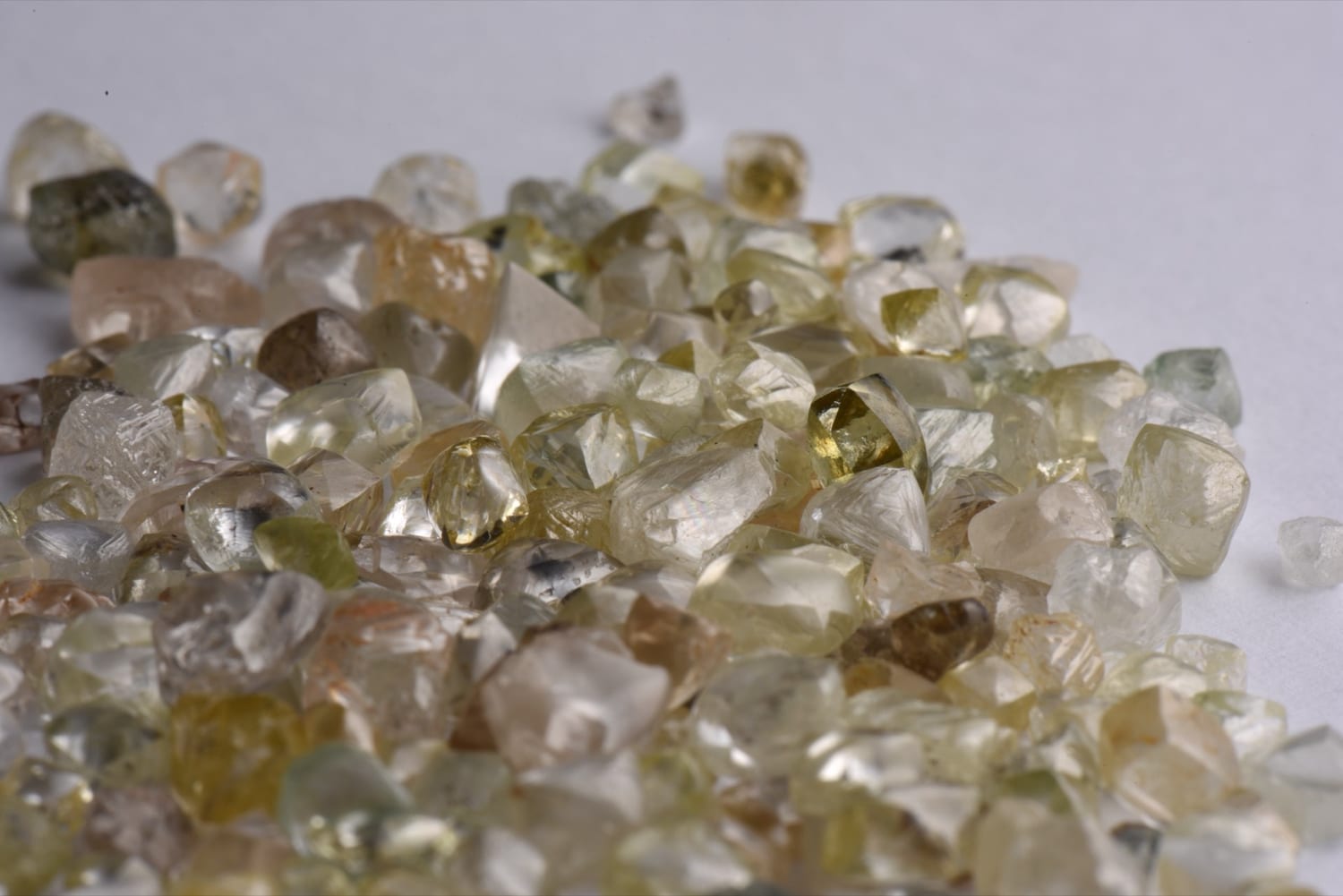
Antwerp has held the centre of the diamond trade since the fifteenth century. It outlasted Amsterdam, its old rival, and every centre that has risen since; today more than 80% of the world’s diamonds have passed through the city on their way to the market. Mined on five continents, the world’s rough finds its way, almost without exception, to one small quarter of one northern port — and leaves again as the polished stones the world wears.
For a buyer, that is not a piece of trivia. It means there is one place where diamonds are understood most deeply, graded most strictly and priced most keenly — because it is the place they all reach first, before the long line of hands between the mine and the finger has added its margins. To buy in Antwerp is to buy a step closer to the source. This guide is about what that step is actually worth.
The street the world crosses
Almost every diamond on earth passes, at some point, down a single Antwerp street. The Hoveniersstraat is the most famous and most reputed address in the trade, and the true heart of the city of diamonds. It is an unremarkable street to look at — a few hundred metres of plain façades behind the Centraal Station — and a fortune crosses it every day. Stones from every mine on the planet are carried along it, hand to hand, in folded paper parcels worth more than the buildings that house them.
Around it lies the diamond quarter: barely a square kilometre, sealed at its ends and watched at every corner, holding four diamond bourses and the thousand small offices that feed them. This is where dealers meet, where a parcel is opened on a table by the flat northern light Antwerp has always graded by, and where a deal is still closed on a handshake and two words — Mazal u’Bracha, luck and blessing — honoured the same way in every bourse on earth. To buy here is to glimpse the life behind the curtains of the jewellery world: the machinery the finished ring never shows.
Inside the diamond office
Behind those façades is the diamond office — the trading floor where rough is sorted, weighed, valued and offered, the quiet engine room of the whole trade. Here, under the same flat northern light, parcels are opened and graded grain by grain; a stone’s promise is read in the rough long before a single facet is cut. It is unglamorous, exacting work, and everything turns on it: nothing reaches a window or a hand until it has first crossed one of these tables.
The skill is in the reading. An experienced eye sees, in a dull crystal, the polished stone waiting inside it — its likely colour, the inclusions that will have to be cut away, the shape it wants to become and the weight it will keep. Price follows that judgement. Read it right and the stone is bought well; read it wrong and the loss is cut into the diamond itself.
The sight and the sightholder
The rough does not reach that table by accident. For most of the last century it moved through a system built, more than by any other name, by De Beers — which brought order to a wild and uneven supply by gathering the world’s rough into a single, measured flow. From that came the sight: a closed, periodic offering, held ten or so times a year, at which a small, hand-picked circle of buyers is invited to purchase rough at first hand.
Those buyers are the sightholders, and the seat is rare by design. It is granted, not bought — a place earned through standing, scale and trust, and held only as long as it is honoured. A sightholder sits at the very source of the trade: first in line for the rough from which every polished diamond is born, buying parcels the rest of the market will only see once they have been cut. The architecture of that system, more than any single stone, is the lasting mark De Beers left on the modern trade; and although supply is more varied today, the shape endures — rough still flows from a few hands at the top, down through the offices of Antwerp, out to the world.
A house’s distance from that source is the truest measure of how it buys. The closer to the first sale, the fewer the hands, and the fewer the margins stacked on the stone before it reaches you.
What buying at the source means for you
Every hand a diamond passes through takes its cut. A stone that travels mine, cutter, wholesaler, importer, retailer and boutique may be marked up many times over before it reaches a window, and almost none of that mark-up is the stone. Buying in Antwerp collapses the chain. A house working inside the quarter sits within a step or two of the rough itself, and prices its polished stones against the trade’s own yardstick — the weekly Rapaport list — rather than a boutique’s aspiration. That is what wholesale, at the source means in practice: not a discount on a retail number, but a different number altogether.
It only holds, though, if the grade is honest, because a price list values a correctly graded stone and nothing else. Read the colour a shade too kindly or overlook an inclusion beneath the table, and the figure is wrong before it is written down. This is the second half of Antwerp’s edge: the city grades as strictly as it trades. A stone bought here leaves with a certificate from a laboratory whose word the whole trade accepts, and provenance from Kimberley-Process, conflict-free mines — the grade fixed and the source clean before any number is agreed.
Where that edge widens most is at the far end of the spectrum, in the fancy colours. A white diamond is priced against a published grid; a fancy pink, blue or vivid yellow is not. Its worth turns on the rarity of the hue and the depth of the saturation, and reading that well is a matter of eye and experience rather than a list — precisely the fluency six centuries in one trade produce. It is also where the widest retail mark-ups hide, because so few buyers can price the stone for themselves. Bought at the source, from people who handle these colours daily, a fancy diamond is one of the few corners of the market where knowing the trade still changes the number.
The house inside the quarter
This is where VHENY sits. Based in the heart of Antwerp, the house buys and sells within the same square kilometre the world’s diamonds cross, and passes the advantage of that address on: polished and rough stones at a competitive, wholesale price, wherever in the world the buyer happens to be. The range runs from pointers to ten carats and beyond, from colour D through to the fancy colours, up to internally flawless, across a wide choice of cuts — and, for those who want it, rough by the parcel, drawn from relationships with the mining corporations that supply the trade.
Membership is part of the guarantee. As members of the Antwerpsche Diamantkring and of the World Federation of Diamond Bourses, we trade in an arbitrated, rule-bound environment, on the same handshake terms honoured across every bourse in the world; and every stone is Kimberley-Process certified, conflict-free by origin. The privileged relationships a house keeps with its partners — shared knowledge, shared standards — are not sentiment. They are how the goods stay good and the price stays honest.
HRD Antwerp, DIVA and the proof of the city
Two Antwerp institutions stand behind all of this. HRD Antwerp is Europe’s reference laboratory, rooted in the city that has graded diamonds for six centuries; its certificates follow the conventions of the International Diamond Council, and it trains many of the graders who go on to work across the industry. When a stone leaves Antwerp with an HRD or GIA report, it carries a grade the whole market will accept.
And now the city tells its own story in public. DIVA — Antwerp’s home of diamonds, jewellery and silver — gathers the oldest craft under one roof: the rough stone and the cut one, the bourse and the bench, the long line of hands a diamond travels before it ever reaches a finger. To walk it is to step behind the same curtain that has always hung over the Hoveniersstraat. A diamond is reason enough to come to Antwerp, but the city gives you more: one of the oldest ports of Europe, the Antwerp of Rubens and Van Dyck, and today a capital of fashion as well as of stones — home to the Royal Academy of Fine Arts and the avant-garde designers known as the Antwerp Six.
Six centuries have not moved the centre. The world’s rough still finds Antwerp first, is read and graded and priced here more strictly than anywhere, and leaves as the stones the world wears. To buy at the source is simply to stand where that happens — a step from the rough, inside the rule-bound quarter, with the grade fixed and the margins not yet added. That is the house’s real edge, and it is not a matter of persuasion. It is a matter of address.
Related reading