Jewellery
Engagement & Bespoke Rings in Antwerp
The full journey to a bespoke engagement ring in Antwerp — choosing the stone, matching its shape to the wearer, setting a budget, and every decision of style, setting, metal and band.
You want your engagement ring to be every bit as singular as the person who will wear it. At VHENY, in Antwerp — the heart of the world’s diamond trade — you can, because the ring is built for you from the first decision to the last: a stone drawn from the wholesale market rather than a retail case, and a design shaped around it entirely to your wishes.
We do two things at once, and together they are our whole advantage. You choose the stone yourself, from the trade, at wholesale price; and you are advised, at every turn, on the design that will hold it. Nothing is off the shelf. What follows is that choosing, in the order the decisions are best made.
The shape of the journey
A bespoke ring is not one decision but a sequence of them, and, taken in the right order, each makes the next easier. It begins with the stone, because everything is built around it; then the shape, a question really about the wearer; then the budget, where beauty is spent; and only then the ring itself — its style, its setting, its metal, its size. Last comes the wedding band, best drawn while the first ring is still on the bench. You need not arrive with all of this settled — the appointment is where it settles; what follows simply takes each decision in turn.
Choosing the stone
Because every diamond is unique — and none more so than the one that will mark an engagement — it is worth knowing the four features that set stones apart. These are the four Cs: Cut, Colour, Clarity and Carat. Each shapes the beauty of a diamond, and each, in turn, moves its price. A fuller account lives in our guide to the four Cs; here is what a buyer most needs to carry into the room.
Cut is, for most graders, the most important of the four, and the only one made entirely by human hand. It governs not the outline of a stone but how much light it gives back, and how that light breaks into fire. Proportion, symmetry and polish together make a cut; done well, they return light to the eye instead of leaking it through the bottom of the stone. Of the four, it is the one never to compromise.
Colour, for a white diamond, is measured by how little of it the stone carries. The scale runs from D, the rarest and most colourless, down through the faintest warmth to Z.
With the exception of the fancy colours, the rarest white diamonds are the most colourless — though the eye is a poor judge of the top grades once a stone is set.
Clarity records the inclusions a diamond formed as it grew — crystals, feathers, clouds — most so slight that a loupe is needed to find them. The rarest stones are free of them entirely: the Flawless diamonds. The useful truth for a buyer is that a diamond can be flawless to the naked eye long before it is flawless under magnification.
Carat is weight, not size — one carat is 0.20 grams, or 100 points. Larger stones are found far more rarely in nature and priced accordingly — and the price does not climb smoothly but steps up sharply at the round weights, a detail worth knowing before you spend.
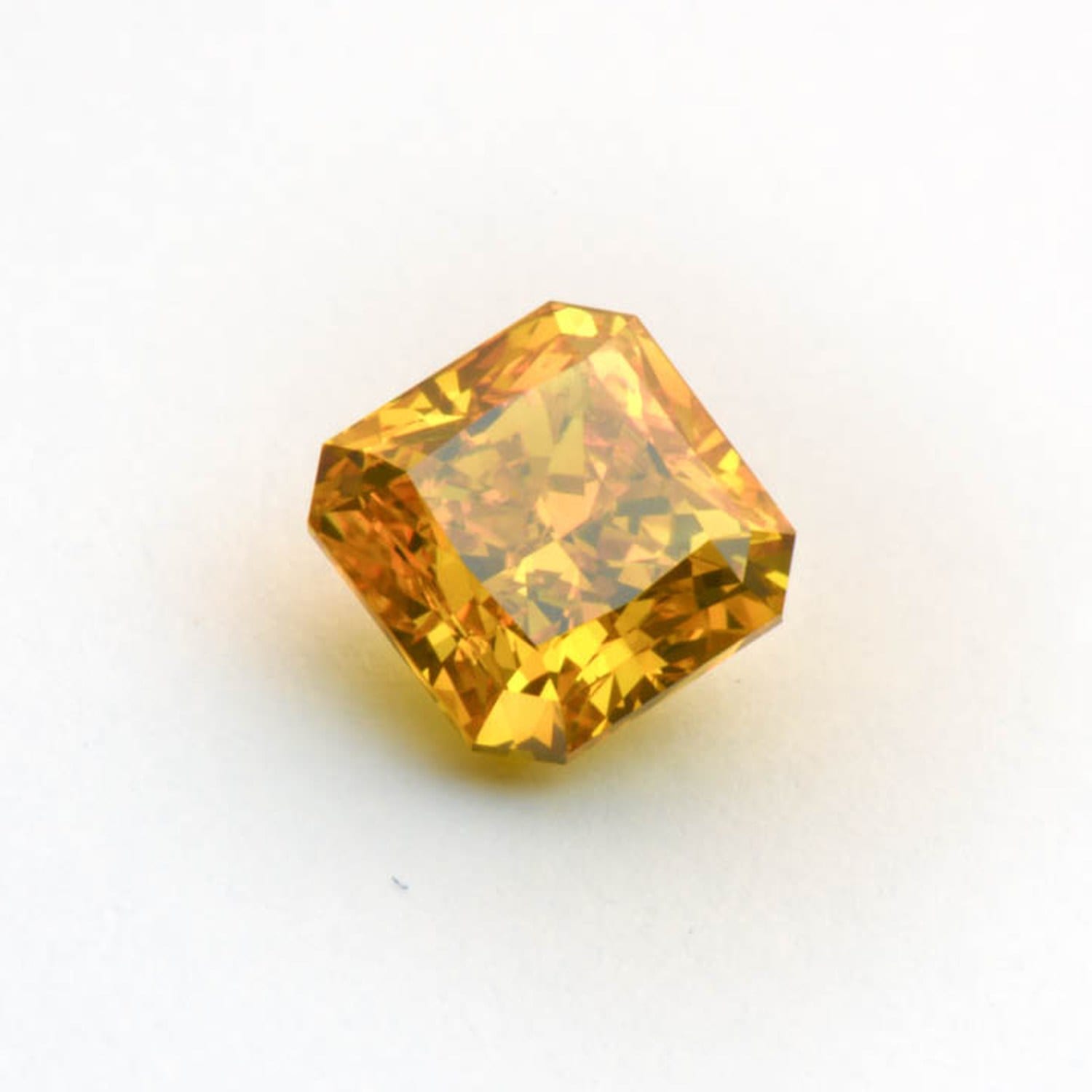
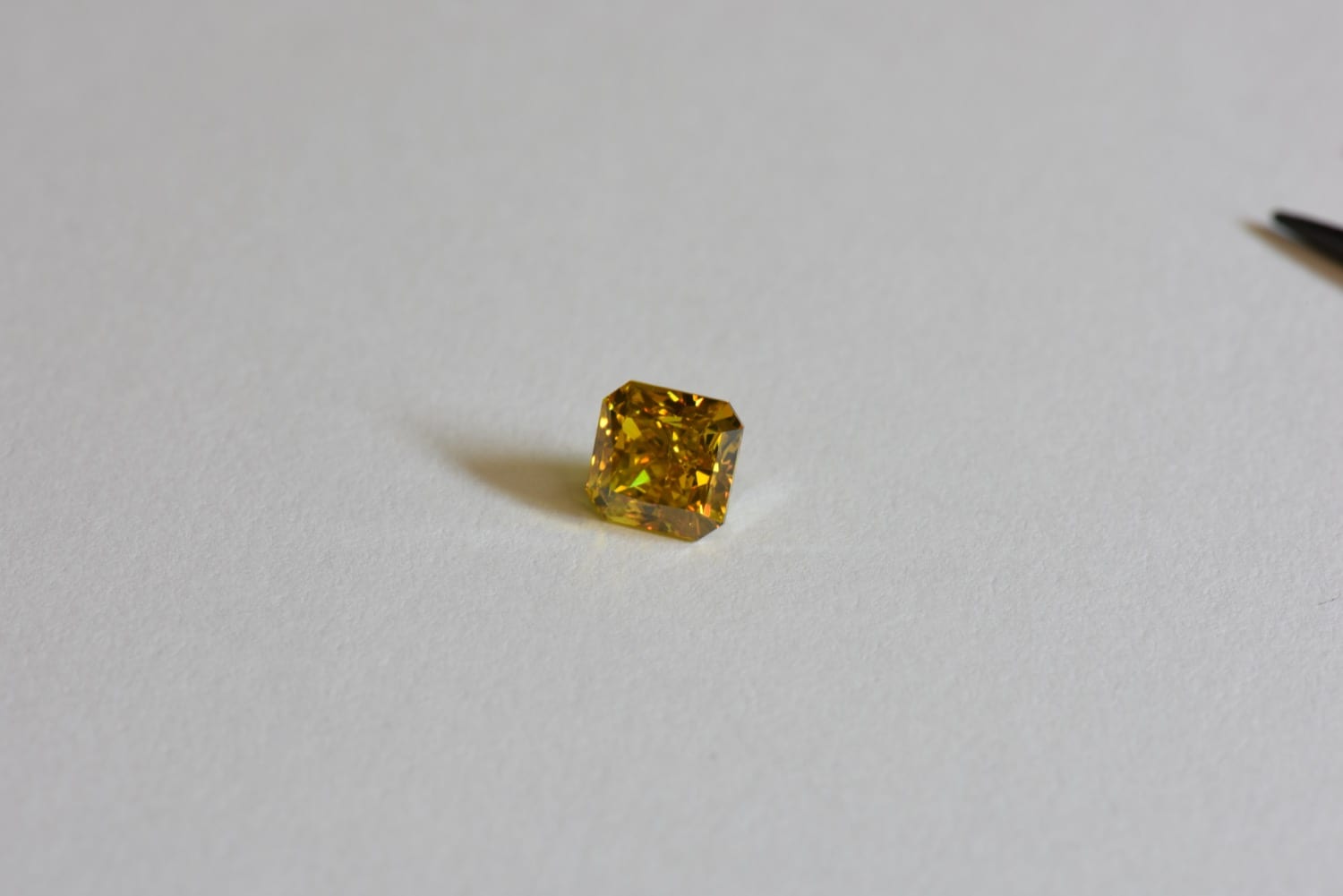
Beyond the white scale lies another realm entirely. When a diamond’s colour deepens past the foot of the D-to-Z world into something true and saturated, it is no longer merely tinted but fancy-coloured — graded not on the absence of colour but on its presence. A fancy yellow, a pink, a blue: these are the rarest diamonds on earth, an extraordinary centre stone for a buyer who wants a ring that could belong to no one else. A fancy centre reframes every decision that follows — the metal that flatters it, the setting that lights it — and we show them alongside the whites.
Matching the shape to the wearer
A diamond is the most personal thing a person can wear, and its shape is the first word it speaks. Long before clarity or carat enter the conversation, the outline of the stone has already set its tone — classic or daring. This is the most enjoyable part of choosing, and the least technical: hold the wearer in mind rather than the grading report. Are they drawn to the timeless or the unexpected, the soft line or the sharp one? The right shape does not impose a character so much as confirm the one already there.
At VHENY we read each silhouette for the temperament it carries — a small help in matching a stone to the person who will wear it. Read the table as a portrait gallery, and find the face you know.
| Shape | Character |
|---|---|
| Round | Enduring and assured |
| Princess | Crisp and confident |
| Emerald | Composed and architectural |
| Asscher | Quietly period, considered |
| Cushion | Soft and tender |
| Marquise | Bold and spirited |
| Oval | Fluid and quietly forward |
| Pear | Graceful and singular |
| Radiant | Luminous, full of fire |
| Heart | Openly devoted |
The round brilliant is the enduring choice, beloved because nothing returns light so completely; the princess answers the same instinct with a clean, assured line. The emerald and the Asscher trade a little sparkle for a calm, architectural composure — one open and luminous, one beautifully reserved — while the cushion softens every edge into something tender and the marquise stretches the stone to a spirited length. At the freer end sit the shapes that step forward on their own terms: the oval for the wearer who likes a familiar thing quietly reimagined, the pear for the one who refuses to choose between brilliance and grace, the radiant for a frank delight in fire. And then the heart — the most literal shape of all, and for the devoted the only one that will do. There is no wrong answer here, only a true one; once the character is named, the rest of the diamond can be chosen around it.
Setting a budget
A budget is not a constraint on beauty so much as a way of directing it. The four Cs do not all repay spending equally — some are seen across a room, others only under a loupe — and knowing which is which lets you put the money where the eye will find it.
Let the cut lead. If one C is worth its weight, it is cut, for the reason already given: it is what makes a diamond live. A modestly graded stone cut to ideal proportions will outshine a higher-coloured, cleaner stone that is cut poorly. So secure an excellent cut first, and never economise on it. Everything below is about where to save once the cut is safe.
Save where the eye cannot look. With the cut settled, the savings live in the grades the unaided eye cannot read.
- Drop just below a round weight. Prices step up sharply at the landmark weights — one carat, two carats. A stone of 0.90 ct sits a whisper below 1.00 ct yet costs noticeably less, and the difference in diameter is all but invisible once set.
- Choose an eye-clean stone, not an invisible one. Beyond a point, clarity is a grade you pay for and never see. A well-chosen SI stone whose inclusions hide from the naked eye looks identical, face-up, to a flawless one — at a fraction of the price.
- Stay near-colourless. In the G–J range a diamond faces up convincingly white, especially in white gold or platinum, where the metal masks any faint warmth. Paying up to the colourless grades buys a rarity the eye struggles to confirm once the stone is mounted.
Then decide in the right order. Set the cut, then the number, then the trade-offs — in that sequence, spending the remainder on the size and the qualities you will actually see. A diamond bought this way looks every bit as beautiful as one costing considerably more; it has simply been bought with its eyes open.
Styling the ring
With the stone chosen, the ring can be built around it — in three decisions: its style, its setting, its metal. First, though, a small tradition. In most cultures the engagement ring is worn on the fourth finger of the left hand — the finger, it was long believed, carrying a vein that runs straight to the heart. The Romans called it the vena amoris, the vein of love.
The style is the architecture of a ring — how many diamonds it carries, and how they are arranged; the decision that gives a ring its character. Each silhouette below is a classic, refined over generations.
Solitaire. A single diamond, alone and unrivalled — the purest statement in all of jewellery. Nothing competes with the stone; the whole weight of the piece rests on the cut, the colour and the fire of one diamond. It is the ring most people picture when they close their eyes, and the hardest to improve upon.
Pavé. A surface paved with tiny diamonds, set so close that the metal beneath all but disappears and the ring seems dusted in light. It runs along the band, around a centre stone or across the shoulders; micro-pavé takes the idea to its finest grain, the band reading as pure brilliance.
Channel-set. A row of diamonds sunk flush between two walls of metal, edge to edge, with nothing breaking the line — an unbroken ribbon of light on a smooth, snag-free surface. Elegant and practical, whether on the band itself or on the shoulders of a centre stone.
Sidestone. A principal diamond flanked by smaller stones at its shoulders, lending it scale and a sense of occasion. The flanking stones can echo the centre’s shape or play against it — tapered baguettes for a clean architectural line, round brilliants for added sparkle.
Three-stone. A central diamond set between two companions of its own — read by many as past, present and future, the three chapters of a shared life. At once symbolic and generous, it carries more brilliance than a solitaire, and a meaning that has made it a favourite for engagements.
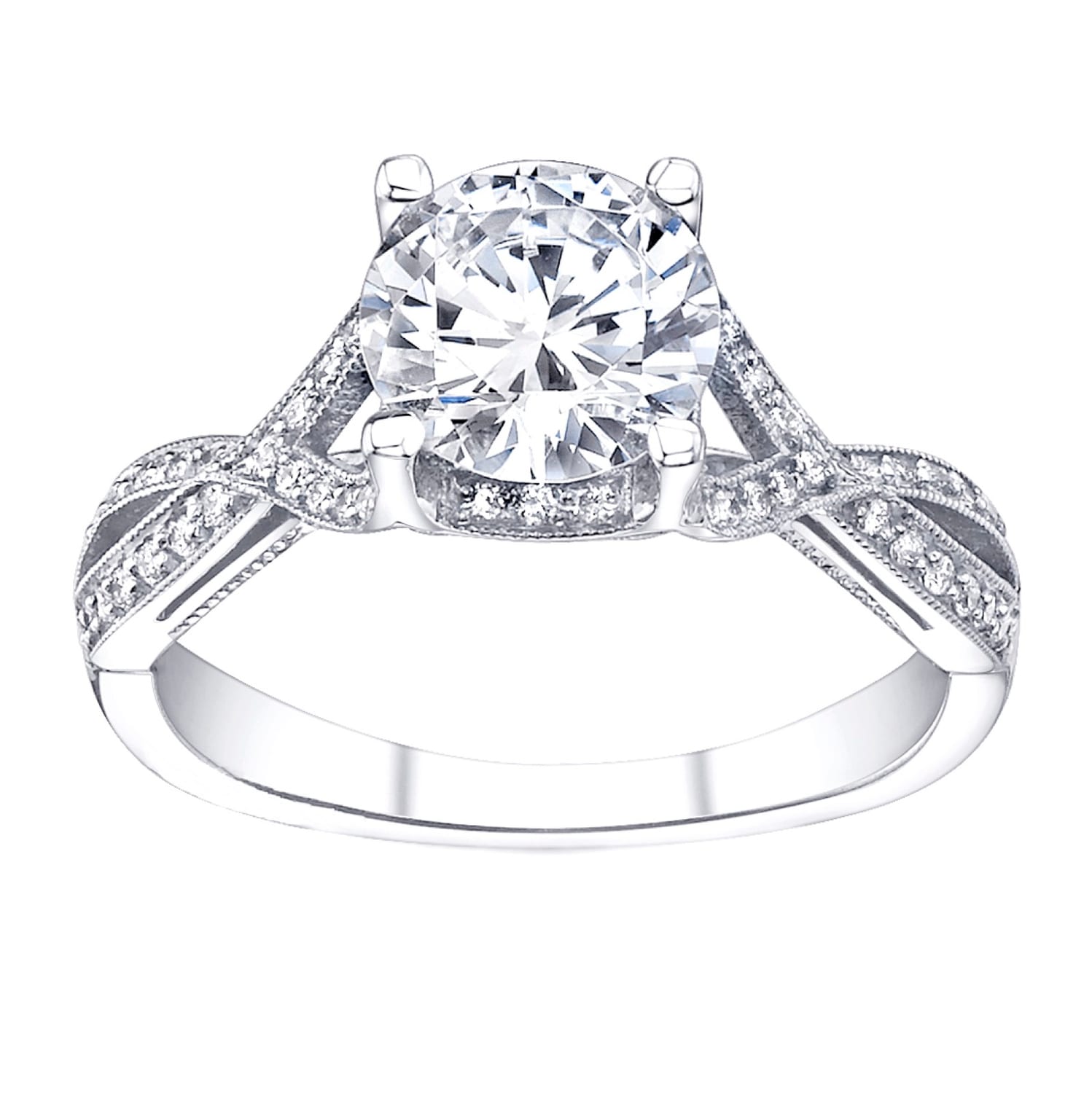
Halo. A centre diamond ringed by a circle of smaller stones that frames it and makes it sing. The surrounding stones throw light inward, so the centre appears larger and more luminous than it would alone — the silhouette that gives a stone the grandest stage.
Tension. A diamond held by the spring of the metal alone, seeming to float between two ends of the band with no visible support. The most modern of the silhouettes — sculptural, minimal, and quietly astonishing to the eye.
Settings — how the stone is held
A setting is the quiet decision behind a ring. It is how the diamond is held — but it is also how much light reaches the stone, how exposed it sits, and how the piece will wear across a lifetime. Every setting strikes the same bargain in a different place: the more metal that touches the stone, the safer it is, and the less light moves through it. The art is in choosing where on that line a ring should sit.
Prong, or claw. The most open of all settings: fine metal fingers — most often four or six — grip the stone just above the girdle and lift it into the light, which enters from almost every angle. Four claws read squarer and admit more light; six hold more securely and read rounder. The trade is exposure — a lifted stone catches the most fire, but also sits most in harm’s way, and the claws ask to be checked over the years.
Bezel, or closed. A continuous rim of metal follows the girdle all the way round, shielding the edges of the stone. It is the most protective setting of all: nothing snags, and the ring wears beautifully for an active life. The cost is a little light, so a bezel-set stone reads a touch quieter than the same diamond on claws. The look is clean and architectural, and can be softened with a half-bezel that leaves the stone open at its shoulders.
Channel. A row of diamonds sunk between two parallel walls of metal, flush and edge to edge with no claws between them. The walls protect the girdles and present an unbroken line of light — a favourite for the shoulders of an engagement ring and for wedding bands. Because the metal carries the stones from the sides, the surface stays smooth, at the cost of a little brilliance.
Bar. A cousin of the channel, but where the channel encloses, the bar reveals: short vertical bars hold each stone on two sides and leave it open top and bottom, so light floods in from above. The rhythm of metal and stone gives the band a graphic, contemporary line and a noticeably brighter row.
Twist. Two strands of metal cross beneath the diamond and carry up around it, raising the stone into the light while the crossing band draws the eye upward. Among the most expressive settings — sculptural rather than symmetrical — it keeps the stone well open, with security resting where the strands embrace it.
Tension. The stone held by the spring of the metal alone, so that it seems to hang in mid-air. The effect is extraordinary, and the setting is in fact remarkably secure — but the most exacting to make, calibrated to one stone, so a later resize or change of diamond is a considered undertaking.
Two further, quietly personal touches sit within the same family: initials worked into the shoulders, plain or set with small diamonds, and a pressure-held stone that seems almost to float.
Choosing the metal
The metal is the last of the three decisions, and one of the most consequential: it sets the colour the diamond appears to carry, the way the piece wears across a lifetime, and the whole temperament of the thing. Two metals serve here — gold, in its several colours, and platinum.
Pure gold is too soft to hold a stone, so it is alloyed for strength, and the proportion of pure gold is marked in karats: 24kt is pure, 18kt three-quarters gold, 14kt a little over half. Higher karats are richer in colour and more yielding; lower karats wear harder. The common choices are 14kt, 18kt and 22kt.
| Metal | Colours | Karats |
|---|---|---|
| Gold | White · Yellow · Rose · Black | 14kt · 18kt · 22kt |
| Platinum | Naturally white | — |
White gold is alloyed with white metals and finished, traditionally, with a fine rhodium plating. Its great virtue is that it keeps a diamond looking its whitest — no warm metal beside the stone to lend it colour — the natural companion to a near-colourless diamond; the rhodium is refreshed over the years to keep it crisp.
Yellow gold is the classic, and the warmest. Higher-karat yellow — 18kt and 22kt — glows with a depth that lower alloys cannot match, and it flatters a stone that carries a little warmth of its own: a faint tint that might show against white metal settles happily into yellow. Soft at 22kt, it asks for a measure of care.
Rose gold is alloyed with copper, which lends it its blush; the more copper, the deeper the colour and the harder it wears. Its warmth is gentler than yellow’s and gives an antique, romantic cast — it suits warmer-toned stones and, against fair skin, reads as quietly distinctive.
Platinum is naturally white and worn pure or nearly so — no plating to refresh, for the colour is the metal itself. Dense and authoritative in the hand, it does not wear away so much as redistribute, gaining a soft patina over decades rather than losing substance. Like white gold it keeps a diamond white; rarer and weightier than gold, it is the most enduring setting of all.
Getting the size right
A ring can be perfect in every other respect and still be wrong if it does not fit. Size is the one dimension that belongs entirely to the wearer — and, happily, the one to worry about least, because a finger is easy to measure and a ring is easy to adjust.
A ring size is simply the inside circumference of the band, and there are two reliable ways to find it. The first is to measure a ring the wearer already owns — its inside diameter, taken across the centre, matched against a sizing chart. The second is to measure the finger directly, wrapping a slim strip of paper or a length of string snugly around its base, marking where it meets, then laying it flat. A finger is not fixed, so a little care pays off: measure at the end of the day, since fingers shrink in the cold and swell in the heat; mind the knuckle, which the band must clear; and take more than one reading.
There is no single ring size used the world over — each region keeps its own scale, which is why a ring bought in one country reads differently in another. What never changes is the measurement beneath the name: the inside circumference, in millimetres.
| System | Expressed as |
|---|---|
| UK · Ireland · Australia | Letters (A–Z) |
| United States · Canada | Numbers, with half sizes |
| Continental Europe | Circumference in millimetres |
| The constant beneath them all | Inside diameter / circumference in mm |
When in doubt, give us the millimetre measurement rather than a size from a chart — it is the one figure that carries cleanly across every standard. And a resize is nothing to fear: most rings can be sized up or down by a skilled hand, and at VHENY resizing is free of charge, so a ring can be brought to an exact fit after the fact and adjusted again down the years should a finger change. Choose the ring you love; the fit, we will make right.
The wedding band beside it
A wedding band is the ring that sits beside the engagement ring for a lifetime, and the two are best considered together. At VHENY you can have the band made alongside the engagement ring — the pair designed as one, so they meet flush against the finger and read as a single line on the hand.
Two rings drawn up at the same moment can be shaped to each other exactly: the band’s profile following the engagement ring, the metals chosen to agree, the whole sitting true with no gap between them — the surest way to a perfect fit, a matched pair conceived together rather than reconciled after the fact.
A design of your own is equally welcome, brought as a photograph or a careful drawing. From that our workshop makes the band you have in mind — and where the engagement ring is itself a custom design, we match the band to it, carrying the same line, metal and hand through both.
How the ring is made
A finished ring looks effortless, which is precisely the point — the work is meant to disappear into the result. Behind it lies a sequence as old as goldsmithing and as current as the latest software, carried out here in the workshops of the diamond district, a few streets from where the stone was bought at the trade — from a first model in wax to the final breath on the polishing wheel.
The model. Every ring begins as a model — a faithful, full-size copy of the piece to come, in wax or metal. A master jeweller may carve it by hand, working a block of wax with files and gravers until the form is exactly right; or it may be drawn in CAD, designed on screen and grown on a 3D printer as a resin or wax pattern. Hand carving carries the individuality of the maker; CAD brings exactness, and lets a design be adjusted, matched or repeated. Either way, the model is the truth from which everything else is taken.
Casting. From the model the workshop makes the metal. The wax pattern is set on a wax “tree”, encased in a flask of fine plaster investment, and heated in a kiln until the wax burns cleanly away — the lost-wax method, unchanged in principle for thousands of years. Molten gold or platinum is then forced into the cavity the wax left behind, driven into every detail by centrifugal or vacuum casting. Once cool, the investment is broken away and the rough ring emerges.
Setting and assembly. The raw casting is now refined into a ring: sprues removed, the form filed and trued, any parts assembled and soldered, and the seats for the diamonds cut into the metal with precision. Then comes the setting itself — the diamonds placed and secured, claws bent down over the girdles, bezels burnished tight, channels and pavé worked stone by stone. This is the most exacting stage of all, and the one on which the security and the brilliance of the finished ring most depend.
Polishing and finishing. Last, the ring is brought to its final surface, worked through successively finer abrasives and compounds until the metal reaches a clear, deep shine — or given a matte, brushed or hammered texture where the design calls for it. It is cleaned, often ultrasonically, and given a final inspection: every claw checked, every stone seated, every surface true, before it leaves the bench as the ring it was drawn to be.
The appointment
When your idea has settled, you are ready to meet our specialist. Because every diamond is unique — and two stones with near-identical grades can look entirely different to the eye — it is always worth comparing diamonds side by side before choosing. Our specialist arranges a viewing, presenting a selection drawn from the trade to match your wishes: whites and fancy colours alike, judged by the eye rather than the paper.
Once the stone is chosen, the setting follows. With your budget, the criteria you would like us to prioritise, and the style of mount you favour, we shape an appointment that is less a transaction than the making of something kept for life.
A wedding band can be made at the same moment, matched to the engagement ring or to a drawing of your own. The two rings, made together, belong together — the last decision in a journey that began with a single stone, chosen at wholesale, in the heart of the diamond district.
Related reading